
















































 Where To Buy
- Mix and use one complete unit as provided by the manufacturer at a time.
- Mix curing agent with base material for 5 - 10 minutes using a suitable paddle fitted to a 500-rpm electric drill moving the paddle completely through the mass of the material until a smooth & even consistency is achieved.
- The sides and base of the container should be periodically scraped down with a palette knife to ensure all of the catalyst is completely blended with the base component.
- Failure to mix correctly will result in uncured sealant.
- Once mixed SealPro PS should be used immediately.
- In cold weather SealPro PS mixes more easily, if stored overnight at room temperature
- SealPro PS GG is supplied with base and catalyst in the same single container ready for mixing , Mix thoroughly using a slow speed drill (300 to 500 rpm)
SealPro PS GG
 Share
Share

Multi-component, heavy-duty, Gun and Pouring Grade, flexible polysulphide joint sealant
In stock
Only %1 left
SKU
SPPSGG
| DATA | RESULT |
| Colours | Grey or Black |
| Cure mechanism | Chemical cure |
| Density | 1.55 – 1.66 kg/ L |
| Solid Content | 98 - 100% |
| Shore A Hardness | 22-27 (SealPro PS GG) |
| Recommended Movement Accommodation factor (MAF) | ± 25% |
| Staining | Generally non-staining |
| Pot Life @ 23º C | 120 -180 minutes |
| Initial cure for light traffic | 36 hours @ 15º C 18 hours @ 25º C |
| Full cure for chemical attack or water immersion | 14 days @ 15º C 7 days @ 25 C |
| Water immersion | Must be fully cured before permanent immersion |
| Application Temperature | From +5º C to +45º C |
| Service Temperature | From -20º C to +60º C |
| VOC content | < 60 g/ liter |
| Chemical Resistance Dilute acids, Dilute alkalisLubricants, Oils, SkydrolChlorinated & Aromatic SolventWhite spiritAviation fuel, KeroseneDilute oxidizing acids | Resistant Resistant Resistant Resistant Resistant Resistant |
* All values given are subject to 5-10% tolerance
* Properties listed above are only based on controlled laboratory samples and tests: Results may differ based upon statistical variations depending upon mixing methods and equipment, temperature, application methods, test methods, actual site conditions and curing conditions.
®=Registered trademark of the North Group.
Description
SealPro PS is a high grade, chemical curing, two component polysulphide-based sealant, which when mixed and applied, cures to form a tough, flexible, durable, rubber like seal which adheres to most common construction surfaces and provides fully waterproof seals in joints subject to a high degree of deformation or continuous cyclic movements
SealPro PS is available in gun and pouring grades.
- SealPro PS GG is a non-sag, flexible gun grade version, ideal for general applications (vertical, overhead and horizontal). It is packed in a ready to mix, 4 litre tin containing the base and curing agent in the correct proportions.
Additional Information
| Applicable Standards/ Compliance: | Packaging: | Colours: |
| ASTM C 920, Type M, Grade NS/P, Class 25, Use T,M, & O mainly for traffic grade BS EN ISO 11600, Type F, Class 25LM TT-S-00227E – General compliance BS 5212: Part 1: 1990 |
|
Grey and Black |
Width to Depth ratio:
Design of the joint should be done keeping in view the movement capability of the sealant. Normally a width to depth ratio of 2:1 must be maintained in joints subjected to movements. Joints should be designed so that total movement due to concrete shrinkage and thermal change does not exceed the ± 25% (MAF) movement accommodation factor related to the joint width, in accordance with the recommendations of BS 6093
Joint width design recommendations:
- Sealant depth shall never exceed joint width.
- Minimum 5mm for metals, glass & other impervious surfaces.
- Minimum 10mm for all porous surfaces.
- Minimum 12mm for non-moving construction floor joints
- Minimum 20mm for joints exposed to hydrostatic pressure or permanent immersion. N.B. Joints subject to total immersion should have a 1:1 profile.
- Minimum 20mm for expansion or movement joints exposed to traffic with the sealant tooled to a depth of 3mm below flush.
Joint depth design recommendations:
- For non-immersed expansion joints, subject to cyclic movement, and greater than 20mm wide, it is important that the depth should not exceed half the width to optimize the elastomeric properties of the joint sealant
- Minimum 6mm for non-porous surfaces
- Minimum 8mm for porous surfaces
- Minimum 20mm for trafficked joints
- When using filler boards in expansion joints to achieve the correct depth, it is essential to use a backer rod or insert a bond breaking tape into the joint in order to prevent 3-point adhesion
Application Guidelines:
It is recommended that joints to be sealed with SealPro PS are left till the final stages of construction when internal temperatures have stabilised, and initial concrete shrinkage has taken place. The bulk of concrete shrinkage will take place within the first 28 days therefore sealant works should be delayed for this minimum period.
Joint preparation
- Before applying SealPro PS, check the joint edges for soundness and if found weak, cut recess and fill up with suitable repair mortar. To ensure optimum adhesion the joint faces must be sound, clean dry and free from any loosely adherent material which could prevent adequate bond to the substrate. All traces of contaminants such as oil, greases, chemicals and laitance should be removed.
- All metal surfaces must be free of all rust, scale and protective lacquers. Use a suitable solvent to remove any traces of oil or grease.
- All dry residual dust from joint cutting operations should be completely removed using a rotary power brush, dry abrasive blasting or other approved means. Blow all joints clean using dry oil free compressed air.
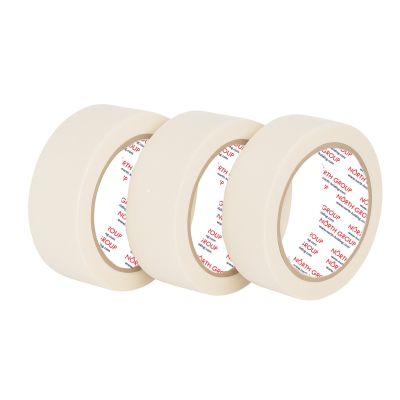
- When required, use a foam backing rod to act as a bond breaker and taking care to maintain the correct width/depth profile. It is recommended to use masking tape to obtain neat straight edged seals. The tape should be removed immediately following the completion of the application.
Coverage/ Yield:
GUIDE TO SEALANT QUANTITIES
Number of litres required = Joint width (mm) x joint depth (mm) x joint length (m) /1000
| Joint Size in mmW x D |
Litres per LMW x D x L/ 1000 |
LM per 4 litre pack |
LM per 18 litre pack |
| 10 x 5 | 0.050 | 80.00 | 360.00 |
| 10 x 10 | 0.100 | 40.00 | 180.00 |
| 15 x 7.5 | 0.112 | 35.71 | 160.71 |
| 15 x 10 | 0.150 | 26.67 | 120.00 |
| 20 x 10 | 0.200 | 20.00 | 90.00 |
| 30 x 15 | 0.450 | 8.89 | 40.00 |
| 40 x 20 | 0.800 | 5.00 | 22.50 |
| 50 x 25 | 1.250 | 3.20 | 14.40 |
* Care should be taken to allow for wastage
Priming
- The use of a primer is always required on porous surfaces. Joint faces must be clean and dry. Wire brush thoroughly and vacuum clean concrete and masonry surfaces
- One thin coat of SealPro PSP (a single component chemically active liquid primer, recommended for all porous substrates namely concrete, stone, brickwork, timber etc) should be applied using a clean, dry brush, ensuring complete coverage.
- Avoid over priming resulting in an excess of primer in the base of the joint or application beyond faces.
- Coating should be removed and the coated surfaces should be treated as above.
- Wood surfaces must be clean and dry, cut back or abrade where necessary to sound timber.
- Priming is not normally required on non-porous surfaces when using SealPro PS in dry, sound, well prepared joints, or joints which have been reformed using a suitable RepairPro repair mortar, except where glass or glazed surfaces are to be permanently immersed in water. Thoroughly solvent clean the surfaces
- Iron and steel must be protected with an anti-corrosion primer prior to sealing. Remove corrosion or mill scale by grit shotblast, wire brush, grinder or chemical remover. Degrease the surfaces with solvent.
- The mixed SealPro PS must be applied when the primer is tack free, that is after the evaporation of the solvent but before the primer film has completely reacted. After 3 hours the surfaces must be re-primed before applying the sealant. The flash off time is minimum 30 minutes and maximum 3 hours.
Typical Applications
- The product may be applied to joints between 5 and 50 mm wide. It is particularly recommended for applications on building and civil engineering structures including structural concrete, floors, brick work, retaining walls, reservoirs, bridges, tunnels, precast concrete panels, basements and subways and for areas where access may be difficult for future maintenance including the areas where early movement failure must be minimised.
- Suitable to be use in potable water tanks & reservoirs
- Wet areas such as kitchens, laundries, bathrooms and showers, terraces, decks and balconies
- Horizontal trafficable floor joints subject to heavy usage and traffic in airport runways, car parks and culverts
- Industrial areas and those subject to chemical spillage
- Remedial repairs to asphalt, concrete, fiber reinforced cement or similar slab surface
- As a bolt hole sealant for the expansion joints
Benefits
- Forms a tough, elastic, rubber-like seal
- Durable water and weatherproof sealing even in joints with high levels of deformation (M.A.F. ± 25 %)
- Accommodates continuous and pronounced cyclic movement over a wide temperature range
- Excellent resistance to deterioration due to weathering, ozone, U.V. light and high climatic and in-use temperatures
- Excellent adhesion to most common substrates, including primed concrete, glass, aluminum, brickwork, metal, tiling, masonry, stone and stainless steel
- High resistance to ageing reduces physical damage due to climatic extremes
- Good resistance to chemicals and hydrocarbon fuels.
- Heavy load bearing capacity
- Suitable for use in wide joints
- Suitable for use in hot and tropical climatic conditions
Substrate Preparation
Product Preparation
Product Application
Gun Grade:
- Immediately after mixing, load sealant into a sealant gun using the Follower Plate & apply to the joint.
- SealPro PS GG is formulated to be applied using a sealant gun but may be applied by trowel if required.
- Sealant guns are fitted with conical nozzles which can be cut to suit the joint width
- When applying the sealant to a vertical joint, start application at the bottom of the joint so as to continuously support the sealant.
- The sealant should be gunned into the joint using an even trigger pressure, cleaning the nozzle occasionally to avoid contamination. Deep joints should be filled in two or more runs, to prevent air entrapment.
Others
Finishing:
In order to displace any air bubbles present in the sealant caused by mixing and also as an aid to good adhesion, it is advisable, immediately after the SealPro PS has been installed, to finish by tooling with a rounded spatula or similar object. The outermost surface of the sealant should be finished with a slightly concave profile. On no account must moistened fingers be used. Protect the finished seal from inclement weather until initial set has taken place and the surface skin is clearly visible. Finally, strip off any masking tape that may have been used during installation.
Cleaning:
Clean tools immediately after use with Solvent. Clean hands with a proprietary hand cleaner. Cured sealant can be removed only by mechanical means. Any spillages of SealPro PS should be absorbed immediately onto sand, sawdust or other suitable absorbent materials and disposed in accordance with local regulations.
Storage & Shelf Life:
12 months if stored in original unopened containers in a cool dry environment at ambient temperatures below 25°C. Do not store in direct sunlight. Storage above this temperature may reduce storage life.
Write Your Own Review