




























 Where To Buy
The surface onto which the product is to be applied should be scabbled to remove laitance and expose aggregate. Do not use bush hammers or similar preparation equipment that can crush the aggregate but leave it in place. The substrates must be sound, clean, dust free and free from all traces of oil, curing compound, gypsum, paint, corrosion deposits or algae, laitance which would impair adhesion.
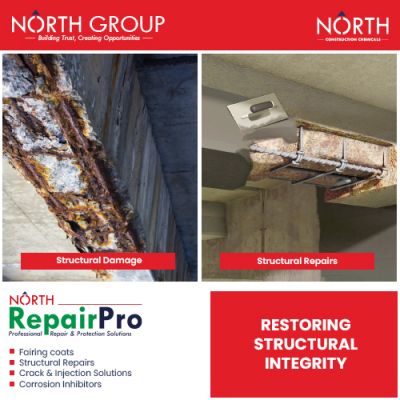
Remove degraded and or loose concrete until the substrate is solid, resistant and rough. Any previous restoration work which is not soundly bonded should also be removed. The damaged areas of concrete to be removed should be clearly identified. The perimeter of the area should be saw cut to a depth of 10mm and the edges cut as neatly as possible keeping the sides square. Feather-edging is not permitted and a minimum thickness of 10mm must be maintained over the whole repair area.
If reinforcement is corroded ensure that the back of the steel has been exposed. Reinforcement should have all rust removed by the use of power tools, abrasive blasting (wet or dry) or wire brushing. Reinforcing steel should be exposed and cleaned around its whole circumference. For extra protection, rebars can also be overcoated with zinc-based epoxy primer RepairPro ZR formulated specially for steel protection. Reinforcing steel should be exposed and cleaned around its whole circumference. Severely corroded reinforcement may require replacement and the engineer must be consulted.